
American Mahjong Basics
SMALL LESSONS. REAL CONFIDENCE.
A real beginner's guide — no experience required
Confidence isn't taught. It's built. So before we hand you a single strategy tip, let's just walk through how the game actually works — plainly, in order, the way you'd want a friend to explain it across the table.

Small Lessons • Big Confidence • Play Your Way


What You're Working Toward
American Mahjong is played by four people, each with a rack of fourteen tiles. The goal is simple to say, even if it takes practice to do: be the first player to arrange your tiles into one complete winning hand, matching a pattern from that year's card.
That's it. Everything else in this guide is just the path to get there.
The Tiles, Briefly
You'll be working with three suits (Dots, Bams, and Craks), plus a handful of special tiles — Winds, Dragons, Flowers, and Jokers. You don't need to memorize all of them today.
You'll meet them naturally once you're holding a rack in your hands. For now, just know this: every tile belongs to a family, and learning those families is most of what "reading the card" really means.
Want to go deeper on this part specifically? That's exactly what our Card Decoder™ series is for.
BAM TILES
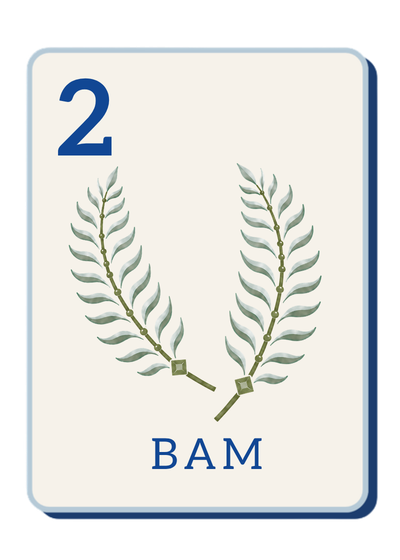

Bam tiles are one of the three numbered suits in American Mahjong.
The suit includes numbers 1 through 9, with four of each tile. The ‘Green Dragon’ is also traditionally connected with the Bam suit.
CRAK TILES


Crak tiles are one of the three numbered suits in American Mahjong.
The suit includes numbers 1 through 9, with four of each tile. The ‘Red Dragon’ is also traditionally connected with the Crak suit.
DOT TILES
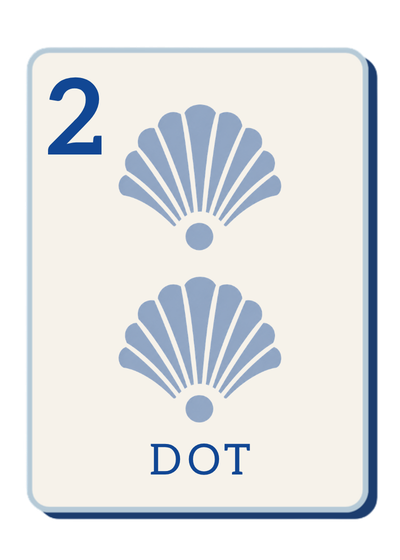

Dot tiles are one of the three numbered suits in American Mahjong.
The suit includes numbers 1 through 9, with four of each tile. The ‘White Dragon’ is also traditionally connected with the Dot suit and is called ‘Soap’.
FLOWER TILES


Flower tiles are special tiles in American Mahjong. They are not part of a numbered suit, but they appear in many hands on the card.
There are eight Flower tiles total, and they are often used as flexible, valuable tiles in a rack.
WIND TILES


Wind tiles are special tiles in American Mahjong. They are not part of a numbered suit, but they appear in many hands on the card.
There are four different winds — North, East, West, and South — with four of each tile.
JOKER TILES

American Mahjong is played with 8 Jokers. Jokers are wild tiles, used to help you complete tile groups.
Jokers can only be used on groupings of three or more and can never be used in a single or pair group.

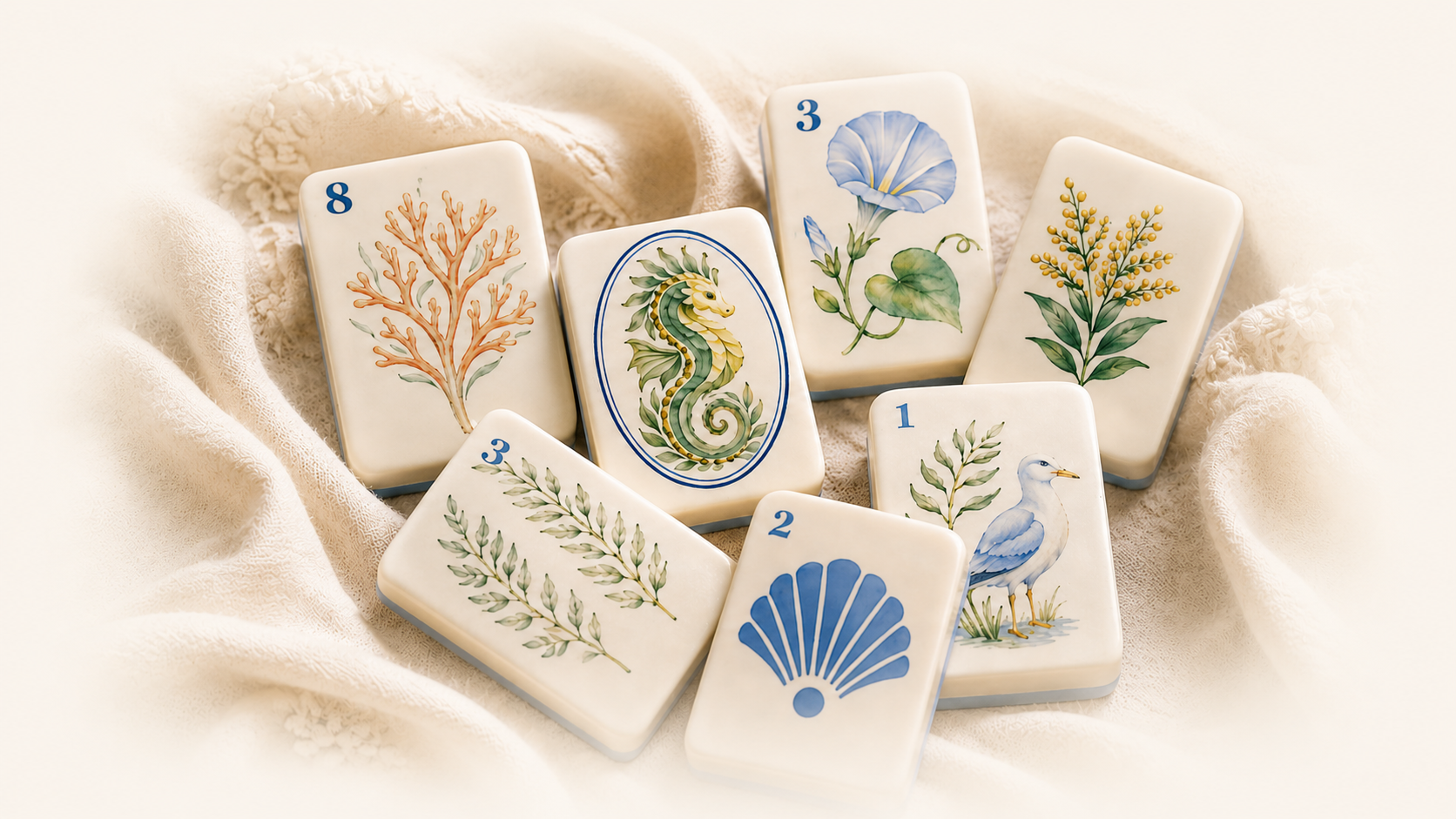
We Start With the ‘Charleston’
Before real play begins, everyone passes tiles around the table a few times. Think of it as everyone quietly tidying their rack together before the game starts — trading away what you don't need, hoping for what you do. We go deep on Charleston strategy elsewhere; for now, just know it happens first, and then play begins.
The Turn: Draw, Look, Discard
After the Charleston, each turn follows a simple rhythm: draw one tile, look at your fourteen tiles, then discard one tile face-up while saying its name out loud.

Draw: Take one tile from the wall to add to your rack.
Look: Study your fourteen tiles and decide what helps your hand the most.

Discard: Place one tile face-up in the center and say its name out loud.


OUR SOLUTION
Calling a Tile
MahjTrainer™ combines daily practice, expert instruction, and a supportive community to help you build real skill — and real confidence.
Once the Charleston ends, play moves around the table in order. On your turn, you do three things:
Draw one tile from the wall. Look at what you now have — fourteen tiles instead of thirteen. Discard one tile face-up, saying its name out loud as you do.
That's the whole rhythm. Draw, look, discard. Around and around the table until someone wins.
Winning the Hand
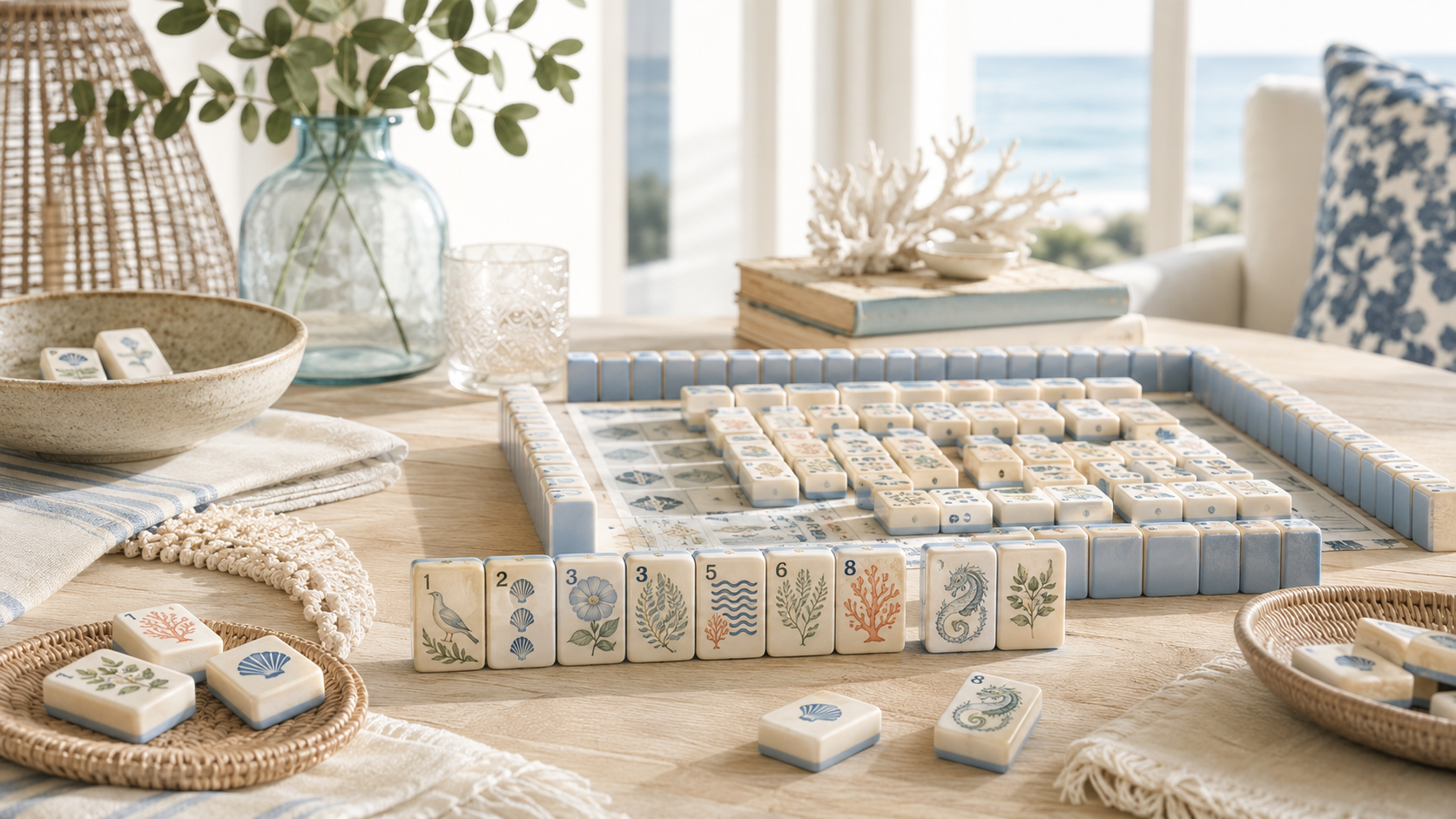
You win the moment your fourteen tiles form one complete pattern from the card — exactly, with nothing left over. When that happens, you call "Mahjong," lay your tiles down, and the table checks your hand against the card to confirm it's valid.

That's the whole
shape of a game
OUR SOLUTION
Charleston, then turns, then someone calls Mahjong. Which pattern to build toward, which tiles to keep, when to pass and when to hold — that's the part the rest of MahjTrainer™ is built to help you with. But the basic rhythm of play is just this: draw, look, discard, and stay ready to call.

Learn More on Card Decoder™

What a Lovely Street
Learn to read one line at a time — no more, no less.

Come to the Table
Take what you've learned and bring it to an actual game.
Rules of the Playground
The little rules that trip up almost every new player, in almost exactly the same way.
Start with the big picture -before any single rule, just get the lay of the land.

Around the Town
Find your category on the card, and the rest starts to make sense.

Welcome to the Neighborhood
Zoom into one exact tile group and see precisely what it asks of you.

This House, Specifically
Decode the small print — point values, concealed vs. exposed — without the overwhelm.